China Top Heavy Duty Motor Manufacturers for Global Buyers?

Time:2026-10-07 Author:Liam
0%

China has become a major sourcing base for Heavy Duty Motor products used in cranes, conveyors, pumps, compressors, and industrial machinery. Global buyers often compare Chinese manufacturers because they offer broad production capacity, competitive engineering support, and export experience. Yet a factory website rarely reveals the full picture. Real performance depends on motor design, insulation quality, bearing selection, cooling method, and after-sales discipline.

This guide examines China’s top Heavy Duty Motor manufacturers from a buyer’s perspective. It considers manufacturing experience, customization capability, testing procedures, certifications, delivery records, and service coverage. Practical details matter. A serious supplier should explain rated power, voltage, frequency, protection class, efficiency, duty cycle, and operating temperature. Buyers should request test reports, technical drawings, sample approvals, and clear warranty terms before placing large orders.

Factory visits can reveal useful evidence, including balanced rotors, organized winding stations, calibrated test equipment, and traceable inspection records. However, visual impressions are not enough. No supplier is perfect. Some companies communicate well but lack overseas service capacity. Others build reliable motors but provide weak documentation. This overview avoids simple rankings and encourages careful comparison. It highlights manufacturers with technical competence, consistent quality control, and credible international support. Buyers should still verify every claim independently, especially for harsh environments, continuous operation, or safety-critical equipment. The right choice is not always the lowest quotation. It is the motor that performs reliably, fits the application, and remains supportable throughout its working life.
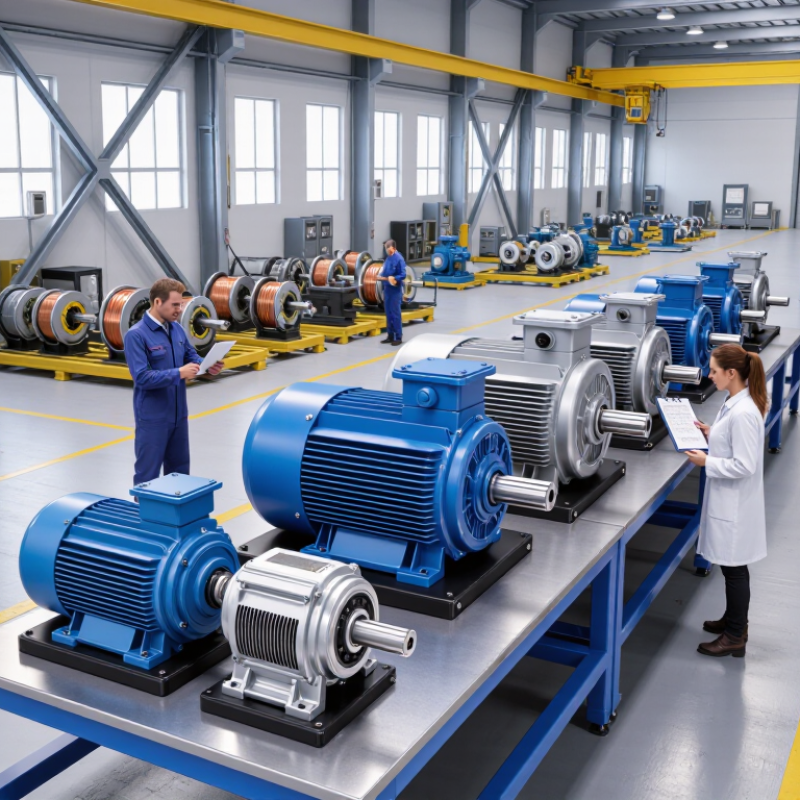
China Top Heavy Duty Motor Manufacturers for Global Buyers?

Heavy-Duty Motor Types and Their Industrial Applications

China Top Heavy-Duty Motor Manufacturers for Global Buyers?

Heavy-Duty Motor Types and Their Industrial Applications

Heavy-duty motors do not share one duty profile. Squirrel-cage induction motors remain common in pumps, fans, conveyors, and compressors. They offer sturdy construction, simple maintenance, and reliable starting performance. Synchronous motors support large compressors and continuous-process equipment. Their power-factor control can reduce electrical losses. Permanent-magnet motors provide high efficiency in variable-speed systems, especially where space and energy costs matter.

Different loads require different designs. Wound-rotor motors can deliver high starting torque for crushers, hoists, and rolling equipment. Medium-voltage motors suit cement lines, mines, and water infrastructure. Enclosed motors protect internal parts from dust, moisture, and chemical exposure. Cooling method also matters. A dusty quarry can punish an otherwise excellent motor.

The IEA’s Energy Efficiency 2024 analysis reports that electric motor systems consume about 53% of global electricity. The U.S. Department of Energy’s motor-system assessments place industrial motor use near 70% of industrial electricity consumption. These figures make efficiency more than a purchasing preference. It becomes an operating-cost issue. Buyers should compare rated efficiency, duty cycle, starting current, insulation class, bearing life, and service support. IEC 60034 guidance helps standardize these checks across markets. A practical warning: catalog efficiency can mislead when motors run below load. Real plants rarely behave perfectly. Temperature, voltage imbalance, poor alignment, and oversized motors can quietly reduce performance. Specification reviews should include measured operating conditions, not only nameplate data.

Key Criteria for Evaluating Chinese Motor Manufacturers

China Top Heavy Duty Motor Manufacturers for Global Buyers

Evaluating a Chinese heavy-duty motor manufacturer requires more than comparing prices. The International Energy Agency’s Energy Efficiency 2023 report estimates that electric motor systems consume about half of global electricity. Efficiency data therefore affects both operating costs and carbon performance. Ask for tested efficiency curves, power-factor results, temperature-rise records, and compliance with IEC 60034 requirements. A credible supplier should provide traceable serial numbers and recent laboratory reports. A factory tour helps. It is not proof.

Check whether the manufacturer understands your actual duty cycle. A motor driving a crusher, pump, or conveyor may face dust, vibration, frequent starts, and unstable loads. Review enclosure ratings, insulation class, bearing design, shaft tolerances, cooling performance, and starting current. The U.S. Department of Energy reports that motor-driven equipment represents roughly 69% of industrial electricity use, making poor sizing expensive over time. Request a witnessed factory acceptance test, dimensional drawings, spare-parts lists, and a written warranty. Service response matters across borders.

Tips: Compare total cost of ownership, not only the purchase quotation. Verify production capacity through order records and audit evidence. Ask how failures are analyzed. A confident answer includes corrective actions, not excuses. Some buyers overvalue certificates and undervalue field support. That is a costly assumption. Review references from applications with similar loads, climates, and maintenance conditions. [Sources: IEA, Energy Efficiency 2023; U.S. Department of Energy, Motor Systems].

China Top Heavy Duty Motor Manufacturers for Global Buyers

Key Criteria for Evaluating Motor Enclosure Protection

Enclosure protection is a practical screening criterion when comparing heavy-duty motors for global applications. The chart uses common IP codes defined by IEC 60529: the first digit indicates protection against solid objects and dust, while the second digit indicates protection against water. Higher digits indicate a higher protection level within each category. Buyers should verify the declared IP rating through the manufacturer's datasheet, test reports, and certification documents.

Reference: IEC 60529, Degrees of Protection Provided by Enclosures (IP Code).

Leading Chinese Heavy-Duty Motor Manufacturer Categories

China Top Heavy-Duty Motor Manufacturers for Global Buyers?

Leading Chinese Heavy-Duty Motor Manufacturer Categories

Chinese heavy-duty motor manufacturers commonly serve mining, cement, steel, water treatment, and power projects. Their product categories often include three-phase induction motors, synchronous motors, DC motors, and specialized motors for harsh environments. Induction motors remain popular because they are practical, durable, and relatively simple to maintain. Synchronous motors suit applications requiring stable speed and improved power-factor performance. DC motors still support older production lines where precise speed control matters.

Heavy-duty induction motors may use cast-iron frames, reinforced bearings, and high-grade insulation systems. Large synchronous units often require careful commissioning and excitation control. Motors for dusty or damp sites need suitable enclosure protection, cooling design, and corrosion-resistant finishes. Certified hazardous-area models may be specified where combustible gases or dust create additional risks. Buyers should verify test reports, efficiency data, vibration limits, and applicable international standards before placing an order.

Manufacturing experience is visible in details. Ask how rotors are dynamically balanced, how winding insulation is tested, and how load trials are recorded. Request dimensional drawings and replacement-part lists early. Small omissions can delay installation. Some specifications are easy to overstate. This deserves scrutiny. A reliable supplier should provide traceable inspection records, clear warranty terms, and responsive technical support. Factory audits, sample testing, and reference checks can reveal differences between a polished quotation and dependable production capability.

Quality Standards, Certifications, and Testing Requirements

For global buyers, selecting China’s top heavy-duty motor manufacturers requires more than comparing price and rated power. The International Energy Agency reports that electric motor systems consume roughly half of global electricity. Small efficiency gains can therefore reduce operating costs significantly. Buyers should request efficiency data tested under IEC 60034-2-1 conditions, not only catalogue claims. A 6.6 kV motor should also show verified temperature-rise, insulation, vibration, noise, and partial-discharge results.

Certification matters, but paperwork is not performance. ISO 9001 supports process control, while IEC 60034 covers key motor requirements, including ratings, protection, cooling, and testing. Export projects may also require CE-related conformity documentation, depending on the destination and equipment category. For hazardous locations, buyers must verify the exact protection certificate and enclosure marking. A general certificate is insufficient. Always match the certificate number with the motor’s model, voltage, frequency, and manufacturing site.

Testing should include routine tests on every unit and type tests on representative designs. Ask for winding-resistance records, no-load current, locked-rotor data, insulation resistance, and a documented heat-run test. The U.S. Department of Energy identifies motor systems as major industrial electricity users, so reliability affects the entire plant. Factory acceptance testing can expose loose terminals, abnormal bearing noise, or excessive vibration before shipment. I would still avoid trusting a polished report without raw readings. Test methods can be correct, yet sampling may be too narrow. Witness testing, traceable instruments, and sealed nameplate data provide stronger evidence for long-term service.

China Top Heavy Duty Motor Manufacturers for Global Buyers? - Quality Standards, Certifications, and Testing Requirements

Evaluation Dimension Relevant Standard or Requirement What Global Buyers Should Request Typical Acceptance Evidence
Quality management system ISO 9001:2015 quality management system certification Confirm that the certificate scope covers motor design, manufacture, testing, and applicable production locations. Valid certificate issued by an accredited certification body; certificate scope and expiry date verified.
Motor rating and performance IEC 60034-1 and the applicable national adoption, including GB/T 755 Check rated output, voltage, frequency, current, speed, duty type, efficiency, power factor, insulation class, and temperature rise. Routine test report matched to the nameplate and approved technical data sheet.
Energy efficiency IEC 60034-30-1 for efficiency classes of line-operated AC motors; applicable local efficiency regulations Define the required efficiency class, test method, operating point, and tolerance before quotation. Efficiency test results showing output power, input power, losses, efficiency, and power factor.
Efficiency test method IEC 60034-2-1, or the test method specified in the purchase contract Ensure the declared efficiency is based on a recognized method and that additional-load loss treatment is clearly stated. Certified or witnessed performance test report with calibrated instruments and traceable measurement records.
Insulation system IEC 60034-18 series; IEC 60034-27-1 for selected insulation diagnostic measurements For inverter-duty applications, specify inverter output characteristics, peak voltage, rise time, switching frequency, and bearing-current protection. Insulation-system documentation, winding resistance records, dielectric withstand results, and surge or partial-discharge data where specified.
Dielectric withstand and insulation resistance IEC 60034-1 routine electrical tests and project-specific purchaser requirements Specify test voltage, duration, insulation-resistance test voltage, temperature correction, and pass/fail criteria. Signed routine test record for every motor or agreed sampling plan, with instrument calibration status.
Vibration IEC 60034-14 for mechanical vibration of rotating electrical machines Confirm measurement locations, speed range, balancing grade, mounting arrangement, and permissible vibration limits. Vibration spectrum or overall velocity readings recorded at specified bearing positions.
Noise IEC 60034-9 for airborne noise emitted by rotating electrical machines State the sound-power or sound-pressure requirement, test environment, load condition, and measurement uncertainty. Noise test report with measurement positions, operating condition, and reported dB values.
Ingress protection IEC 60034-5; IP code classification under IEC 60529 Select the enclosure rating according to dust, water, washdown, outdoor, marine, or hazardous-area conditions. IP test evidence from an appropriately qualified laboratory or an agreed inspection and test plan.
Cooling method and installation IEC 60034-6 cooling classification and IEC 60034-7 mounting code Verify IC cooling designation, IM mounting arrangement, shaft orientation, airflow direction, and installation clearances. Approved dimensional drawing, cooling schematic, mounting code, and nameplate data.
Temperature rise and thermal protection IEC 60034-1 thermal requirements and purchaser-specified ambient conditions Define ambient temperature, altitude, service factor, duty cycle, starting frequency, overload profile, and embedded sensor requirements. Heat-run or type-test data, winding-temperature calculations, and sensor continuity checks.
Mechanical construction IEC 60034 series, approved drawings, and application-specific mechanical specifications Review shaft material, bearing arrangement, coupling load, rotor balance, terminal-box position, lifting points, and foundation loads. General arrangement drawing, material certificates where required, dimensional inspection, and balancing record.
Environmental suitability Project environmental specification; corrosion, humidity, altitude, temperature, and outdoor-service requirements Specify minimum and maximum ambient temperature, altitude derating, humidity, salt exposure, chemical exposure, and storage conditions. Environmental design statement, coating specification, derating calculation, and applicable qualification-test records.
Market-access compliance CE requirements for applicable European-market directives; UKCA requirements where applicable; local electrical safety rules Identify the destination market and confirm whether the motor is supplied alone or as part of machinery or a complete system. Declaration of Conformity, technical file support, risk assessment, instructions, and applicable test reports.
Hazardous-area applications IEC 60079 series and the certification scheme required in the destination country Specify gas or dust classification, equipment protection level, temperature class, zone, gas group, and cable-entry requirements. Valid explosion-protection certificate, marking, certificate schedule, and installation instructions.
Factory acceptance testing Approved inspection and test plan agreed between buyer and manufacturer Define hold points, witness points, sampling level, document submission dates, and nonconformance resolution procedures. FAT report, signed checklist, calibration certificates, photographs, punch list, and final release note.
Traceability and after-sales support Contract-specific documentation and lifecycle support requirements Require serial-number traceability, spare-parts lists, maintenance instructions, warranty terms, response times, and service capability. Final data book, certificate index, serial-number records, recommended spares list, warranty statement, and service procedure.
Buyer note: The applicable standard, certification, efficiency class, and test scope depend on the motor type, rated output, voltage, duty, installation environment, hazardous-area classification, and destination-market regulations. These requirements should be confirmed in the purchase specification and inspection and test plan before production.

How Global Buyers Can Select and Import the Right Motor

Selecting a heavy duty motor for import requires more than comparing power ratings. Global buyers should match voltage, frequency, speed, torque, duty cycle, and mounting dimensions with the equipment already installed. A motor may perform well in a factory test but fail after exposure to dust, heat, or unstable power. Request the full datasheet, efficiency data, insulation class, protection rating, and recommended operating conditions. Confirm that the documents match the actual motor, not only a standard model.

A reliable purchasing process includes sample testing, production inspection, and clear acceptance criteria. Ask for winding resistance records, vibration results, noise measurements, and a documented load test. Check the supplier’s manufacturing experience, quality controls, export history, and after-sales response time. Import planning also matters. Verify packaging strength, shipping dimensions, customs documents, spare parts, and local electrical requirements before payment. A spreadsheet can look complete, yet one missing shaft measurement may delay installation for weeks. I have found that direct technical questions reveal more than polished sales language.

Tips: Send drawings and operating data before requesting a quotation. Compare total cost, not only the motor price. Include freight, taxes, testing, installation, and possible downtime. Ask whether replacement bearings and seals are available locally. Request a video inspection or independent check when the order is large. Keep every specification in the contract, including tolerance limits and warranty procedures. Avoid choosing the cheapest option too quickly; lower efficiency can quietly increase energy costs for years.

FAQS

What should buyers compare when evaluating a heavy-duty motor manufacturer?

Compare efficiency, testing, quality controls, production capacity, and after-sales support. Price alone can mislead. A factory visit helps, but it is not proof.

Which technical details must match the existing equipment?

Confirm voltage, frequency, speed, torque, duty cycle, and mounting dimensions. Check shaft measurements carefully. One missing dimension can delay installation for weeks.

What test documents should a supplier provide?

Request efficiency curves, power-factor results, temperature-rise records, vibration data, and load-test results. Ask for traceable serial numbers and recent laboratory reports. Documents should match the actual motor.

How can buyers judge suitability for difficult operating conditions?

Review dust protection, insulation class, cooling, bearing design, and starting current. Consider heat, vibration, unstable power, and frequent starts. A clean factory test may not reflect field conditions.

Why is total cost of ownership important?

Include energy use, freight, taxes, installation, maintenance, testing, and possible downtime. A cheaper motor may consume more electricity for years. That quiet cost matters.

What should be included in the purchase contract?

Include drawings, efficiency targets, dimensional tolerances, acceptance tests, warranty steps, and spare-parts requirements. Define what happens after a failed test. Vague wording creates avoidable arguments.

How should buyers check a manufacturer’s reliability?

Review similar project references, production records, audit evidence, and failure-analysis procedures. Ask for corrective actions, not polished explanations. Certificates are useful, but limited.

What import details require attention before payment?

Confirm packaging strength, shipping dimensions, customs documents, local electrical requirements, and replacement-part availability. Ask about bearings and seals. Small omissions become expensive.

Conclusion

Choosing the right Heavy Duty Motor is essential for industries that require reliable performance under demanding operating conditions. This article explains the main motor types used in mining, manufacturing, energy, transportation, construction, and other heavy-duty applications, while outlining how buyers can compare Chinese manufacturers by production capability, engineering expertise, customization services, delivery reliability, and after-sales support. It also highlights the importance of reviewing technical specifications such as power, voltage, speed, efficiency, protection level, cooling method, insulation system, and operating environment.

For global buyers, quality standards, certifications, factory testing, performance verification, and documentation should be carefully evaluated before placing an order. The article further provides practical guidance on selecting suitable suppliers, confirming compliance with destination-market requirements, managing communication and contracts, arranging inspections, and planning shipping, installation, and maintenance. A structured sourcing process can help buyers reduce technical risks, control total costs, and secure motors that deliver stable long-term service.

Liam

Liam

Liam is a dedicated marketing professional with a profound expertise in the industry, where he excels at highlighting the unique advantages of our core products. With a keen understanding of market trends and consumer needs, Liam frequently updates our company’s professional blog, providing......