Choosing the right electric motor begins with understanding the application, not browsing a catalog. An Electronic Motor that performs well on a conveyor may fail in a pump, fan, or robotic arm. Load type, starting torque, speed range, duty cycle, and operating environment all influence the decision. A motor facing dust, moisture, or frequent starts needs different protection and cooling. Small details matter. A 2.2 kW motor may seem suitable, yet poor ventilation can cause overheating during long shifts.
Experienced engineers usually measure real operating conditions before selecting a model. They check shaft loads, voltage stability, available mounting space, and control requirements. They also compare efficiency ratings, maintenance access, noise levels, and expected service life. Manufacturer data provides a useful foundation, but field experience reveals practical issues. For example, vibration may come from misalignment rather than motor quality. That detail is easy to miss.
A reliable selection process also considers the drive system. Variable frequency drives can improve speed control, but they may introduce electrical stress or require compatible insulation. Qualified professionals should verify installation requirements and applicable safety standards. Calculations help, but assumptions can still be wrong. I have seen oversized motors waste energy and undersized motors trip repeatedly. Neither choice is truly economical.
This guide explains how to match motor characteristics with real application demands. It focuses on evidence, practical checks, and honest trade-offs. The best choice is not always the most powerful option. It is the motor that delivers stable performance, manageable costs, and dependable operation over time.
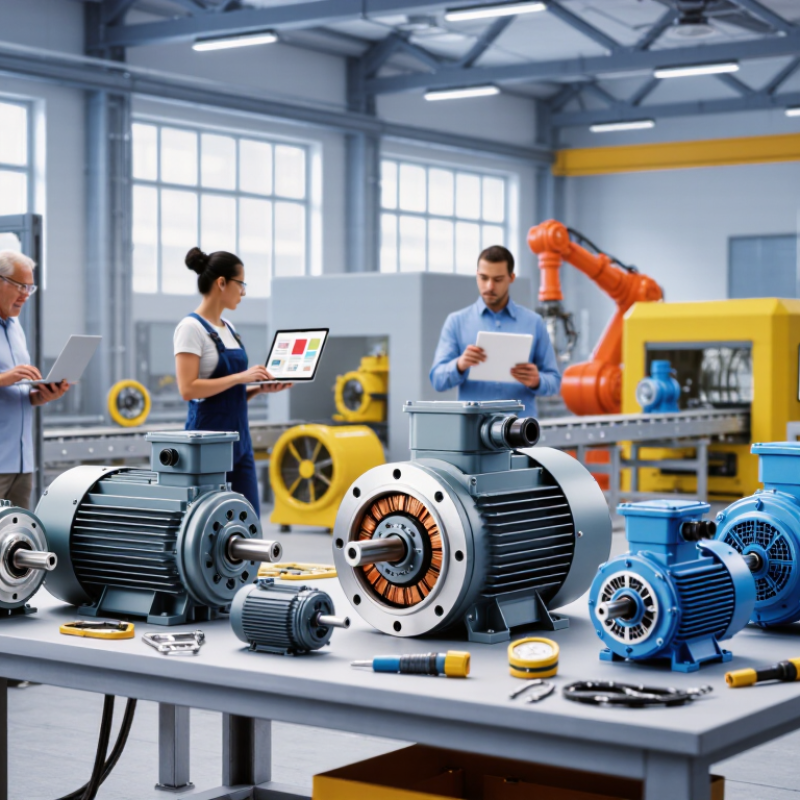
Choosing the right electric motor begins with the application, not the catalog rating. Define the driven load, required speed, starting torque, and operating schedule. A conveyor may run continuously, while a pump may start dozens of times per hour. Those patterns create different thermal demands.
Measure the real load when possible. Estimate alone.
Record the available voltage, phase type, frequency, and control method. Check whether the motor must reverse, brake, or change speed. A motor running near its limit may overheat during acceleration, even when its running power appears acceptable. I have seen selections fail because engineers calculated steady torque but ignored jam conditions.
The environment also matters. Note ambient temperature, dust, moisture, corrosive vapors, altitude, and available ventilation. A sealed enclosure can protect against contamination, but it may also retain heat. Confirm the enclosure rating and insulation system against the actual site conditions. Do not assume an indoor motor will perform well beside a hot furnace or in a washdown area.
Consider mechanical details early. Shaft loading, coupling alignment, mounting position, vibration, and gearbox efficiency can change the required motor size. Service factors can help, but they should not hide an inaccurate load estimate. Leave room for starting events and occasional overloads, without choosing an oversized motor automatically. Oversizing can reduce efficiency and control quality. Your first calculation may be wrong. Recheck it against measured current, temperature rise, and the machine’s worst operating moment.
How to Choose the Right Electric Motor for Your Application
Choosing an electric motor starts with the load, not the catalog. Identify whether the machine drives a fan, pump, conveyor, screw, or lifting mechanism. Each load creates a different torque pattern. A fan usually needs rising torque as speed increases. A conveyor may require steady torque across its speed range. A lift can demand high torque before movement begins. Check shaft torque, speed, duty cycle, and allowable acceleration. Measure twice. A rough estimate can cause overheating, nuisance trips, or weak starting performance. In field assessments, I often find that the stated load is smaller than the real load. Product buildup, cold grease, and belt tension can change the result.
Map the complete motion profile before selecting the motor. Record acceleration time, running speed, deceleration, stops, and reversals. Include the driven equipment’s inertia, not only its rated weight. Frequent starts can heat a motor faster than continuous operation. Starting requirements also deserve close attention. Confirm starting torque, available voltage, current limits, and permitted voltage drop. A heavily loaded conveyor may start slowly or fail when several machines share one supply. Manufacturer performance curves and thermal data provide more reliable guidance than horsepower alone. I have seen selections based on peak torque only, which looked correct but performed poorly during repeated cycling. That mistake is easy to make. Recheck the real operating sequence.
Identify the load type, motion profile, and starting requirements before selecting a motor. The chart compares typical starting current as a multiple of full-load current. Lower starting current is generally easier for the power system, while high-inertia or high-breakaway-torque loads may require a larger motor, a soft starter, or a variable-frequency drive.
Typical engineering ranges are shown for common configurations. Actual values depend on motor design, rated power, voltage, load inertia, acceleration time, and the selected starting method.
How to Choose the Right Electric Motor for Your Application
Motor selection starts with four measurable values: power, torque, speed, and duty cycle. The International Energy Agency estimates that electric motor systems consume 43–46% of global electricity. Small calculation errors can therefore create substantial energy waste.
Calculate mechanical power with P = T × 2πn/60. Here, P is watts, T is newton-metres, and n is revolutions per minute.
For example, a load requiring 20 N·m at 1,500 rpm needs about 3.14 kW mechanically. If efficiency is 88%, electrical input approaches 3.57 kW. A 4 kW motor may fit, but verify acceleration torque and avoid excessive oversizing. Oversizing is not harmless.
Speed must match the machine, not just the catalog rating. Check gearbox ratios, speed variation, and the load’s torque curve. A conveyor may need constant torque, while a fan usually follows a variable-torque pattern.
Duty cycle also affects heating. Record running time, starts per hour, rest periods, and peak loads. IEC 60034-1 provides operating-duty classifications, including continuous and short-time service.
In practice, I would log the motor temperature during a normal shift, then compare it with the manufacturer’s rated limits. Field conditions can expose assumptions that calculations miss. Temperature, altitude, dust, and voltage imbalance deserve attention. The U.S. Department of Energy’s motor-system guidance also stresses system-level assessment, because motors rarely operate alone.
How to Choose the Right Electric Motor for Your Application
Motor selection begins with the load, not the catalog. Record starting torque, speed range, duty cycle, ambient temperature, and available power. A conveyor needs steady torque, while a centrifugal pump usually needs variable speed. Check the duty cycle. Do not guess.
The motor type should match the mechanical demand. Induction motors suit many constant-speed industrial loads. Synchronous motors can improve efficiency and power factor under suitable conditions. For precise positioning, a servo system may be necessary. The U.S. Department of Energy’s 2022 Motor System Market Assessment reports that motor-driven equipment uses about 68% of industrial electricity in the United States. Small efficiency differences can therefore become significant operating costs. I still verify efficiency at the actual load, because nameplate ratings can mislead partial-load decisions.
The drive system and control method deserve equal attention. A variable frequency drive supports speed control, soft starting, and process adjustment. For centrifugal pumps and fans, the affinity laws show that reducing speed can sharply reduce power demand. A soft starter may suit a fixed-speed motor with high starting current but limited speed requirements. IEC 60034-30-1 provides efficiency-class guidance, yet installation conditions remain critical. Confirm harmonic limits, cooling, enclosure protection, braking needs, and feedback accuracy. A technically correct motor can still fail when heat, dust, or frequent starts were overlooked.
Choosing the right electric motor starts with the application, not the catalogue. Measure the required load, speed, duty cycle, and starting torque. A motor that runs efficiently at 75% load may waste energy when oversized. Check efficiency across actual operating conditions, not only the published peak value.
The environment also matters. Dust, moisture, heat, chemicals, and poor ventilation can shorten motor life. Select suitable enclosure protection and insulation for the site. In a humid workshop, condensation may damage windings during shutdowns. Safety requires correct grounding, overload protection, guarding, and emergency isolation. A qualified technician should verify the installation and local electrical requirements. Small mistakes become expensive quickly.
Tips: Record temperature and vibration during commissioning. Compare energy use with the expected load. Keep spare bearings and seals available. Maintenance access is often ignored until the motor fails. Choose a design with accessible terminals and practical inspection points. Consider purchase price, electricity consumption, downtime, service labor, and replacement parts together. The cheapest motor can cost more over five years. I have seen maintenance plans fail because inspection intervals were too optimistic. Leave room for real working conditions, imperfect alignment, and occasional operator error.
Identify the driven machine, such as a fan, pump, conveyor, screw, or lifting mechanism. Each load creates a different torque pattern. Check shaft torque, speed, duty cycle, and allowable acceleration.
Product buildup, cold grease, and tight belts can increase resistance. A conveyor may look lightly loaded but start heavily. Measure twice. Estimates can cause overheating or weak starting.
Record acceleration, running speed, deceleration, stops, and reversals. Include the equipment’s inertia, not only its rated weight. Frequent starts can heat the motor faster than continuous running.
Use P = T × 2πn/60. P means watts, T means newton-metres, and n means revolutions per minute. For 20 N·m at 1,500 rpm, mechanical power is about 3.14 kW.
No. Starting torque, acceleration torque, efficiency, and thermal limits also matter. A 4 kW motor may suit a 3.14 kW mechanical load at 88% efficiency. But the operating sequence still needs checking.
Conveyors often need steady torque across their speed range. Fans usually require rising torque as speed increases. Lifting equipment may need high torque before movement begins.
Confirm starting torque, available voltage, current limits, and permitted voltage drop. A heavily loaded conveyor may start slowly on a shared power supply. It might fail.
Record running time, starts per hour, rest periods, and peak loads. Continuous operation and short-time operation create different heating conditions. Temperature logging during a normal shift can reveal incorrect assumptions.
Yes. Temperature, altitude, dust, and voltage imbalance can affect performance. System-level conditions matter because the motor rarely works alone. I would recheck field measurements before final selection.
Choosing the right Electronic Motor begins with a clear understanding of the application and its operating conditions. Define the required motion, load type, speed range, acceleration, stopping behavior, and starting demands. Then calculate the necessary power and torque, taking into account the duty cycle, peak loads, operating time, and possible overload conditions. These details help ensure the motor can perform reliably without unnecessary energy consumption or premature wear.
Next, select a suitable motor design, drive system, and control method for the application. Consider whether precise positioning, variable speed, smooth acceleration, or frequent reversing is required. Efficiency, installation environment, temperature, dust, moisture, noise, safety, maintenance access, and total ownership cost should also influence the decision. A well-matched motor system improves performance, reduces operating expenses, and supports dependable long-term operation. By evaluating both technical requirements and practical conditions, users can choose a solution that balances power, efficiency, reliability, and lifecycle value.