Selecting the right motor with encoder is crucial for enhancing performance in various applications. These motors provide precise control over speed and position, making them ideal for robotics, automation, and CNC machinery. Understanding your specific requirements is essential before making a choice.
What type of task will the motor perform? Do you prioritize speed, torque, or accuracy? The answers to these questions guide your selection. A motor with encoder can offer reliable feedback, ensuring tasks are completed efficiently. Yet, it's easy to overlook essential specifications like compatibility and power demands.
Consideration of these factors can prevent costly mistakes. Exploring different brands can reveal varying quality and support levels. Some motors might not meet your expectations in practice, leading to underperformance. A thoughtful approach to choosing a motor with encoder can lead to long-term satisfaction and reliable operations.
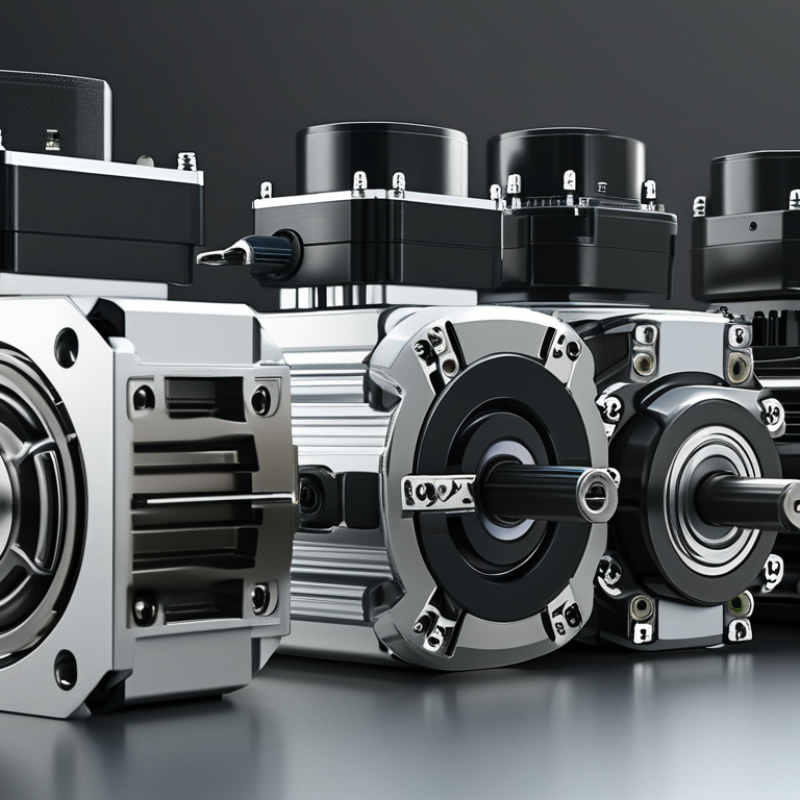
When it comes to selecting the right motor with an encoder, understanding how each component works is crucial. Motors convert electrical energy into mechanical energy. They come in various types, each with unique characteristics. Encoders, on the other hand, transform the mechanical position of the motor into an electrical signal. This signal provides feedback on the motor’s position, speed, and direction.
Choosing a motor requires knowledge of your specific application. For example, a stepper motor is ideal for precise control in robotics. It offers consistent step sizes. However, it may struggle in high-speed applications. Brushless DC motors provide better efficiency and longevity for tasks requiring speed and reliability. Yet, they often need complex control systems.
Compatibility between the motor and encoder is essential. A mismatch can lead to inaccuracies. Consider the encoder's resolution as well, as it affects precision. Low-resolution encoders might lead to less accurate feedback. This aspect often goes unnoticed until issues arise in performance. Ensuring that both the motor and encoder meet your requirements can yield significant benefits, including enhanced efficiency and decreased downtime.
When it comes to motors integrated with encoders, it’s essential to know the types available.
DC motors are popular due to their simplicity. They provide ease of control and speed regulation.
These motors often work well in various applications, from robotics to conveyor systems. However, precision can be a concern in some setups.
Stepper motors are another excellent option for encoder integration. They excel in applications requiring precise positioning and control.
They break motion into discrete steps, making them ideal for 3D printers and CNC machines. Yet, they might struggle with high-speed applications or continuous rotation.
Users should consider these limitations based on their needs.
Servo motors are also noteworthy. They are designed for high performance and accuracy.
The encoder provides real-time feedback for precise positioning. However, they can be complex and costly.
Users must assess whether the investment matches their requirements. It's not uncommon to find that what works in theory doesn’t always suit the practical job at hand.
Each motor has its strengths and weaknesses, and understanding these nuances is crucial.
When selecting an encoder for your motor, consider key features that align with your project needs. Precision is crucial. Look for encoders that offer high resolution. This directly impacts accuracy and performance in motion control applications. You might not need the highest resolution. Sometimes, a moderate option suffices for basic tasks.
Another important factor is the type of feedback. Absolute encoders provide a unique position value, while incremental encoders track changes. Your choice depends on whether you need positional data at all times or just relative movement. Think about the environment as well. Encoders should withstand dust, moisture, and temperature variations.
Installation ease can also be overlooked. Encoders that require less complex setup save you time and reduce potential errors. It’s beneficial to analyze your system's requirements. Assess if you have the expertise to handle more complex systems. Balancing performance, environment, and ease of integration helps you find the right fit for your application.
| Feature | Description | Importance | Example Value |
|---|---|---|---|
| Resolution | The number of pulses per revolution | High - dictates precision | 1000 PPR |
| Type of Encoder | Incremental or Absolute | Medium - affects feedback type | Incremental |
| Operating Temperature | The temperature range the encoder can operate in | Medium - ensures reliable operation | -20°C to 70°C |
| Supply Voltage | Voltage required for operation | High - compatibility with motor | 5V or 12V |
| Durability | Resistance to environmental factors | High - affects lifespan | IP65 |
When choosing a motor with an encoder, matching specifications to your application is crucial. Start by assessing the load requirements. Consider torque and speed needed for your project. Each application is unique and has specific power demands. It’s vital to know the exact specifications of the task at hand.
Tips for selecting the right motor: Understand your environment. Factors like temperature, humidity, and space constraints influence your choice. Are you working in a damp area or a confined space? These details matter. Be mindful of potential miscalculations, as they can affect performance and longevity.
Evaluate the encoder type. There are incremental and absolute encoders, each serving different purposes. An incremental encoder provides speed feedback but lacks position tracking. An absolute encoder offers precise positioning and is suitable for complex applications. Reflect on your project's future needs too. Will you likely require more precision or speed later? Being proactive is key.
When evaluating performance and reliability in motor and encoder systems, several factors come into play. High-quality motors must maintain consistent torque and speed under various loads. According to a recent engineering report, about 30% of motor failures result from thermal issues. Proper cooling methods and efficient designs can significantly reduce these risks.
Encoders are equally critical for precise feedback in motion control applications. A study shows that nearly 25% of operational discrepancies arise from encoder inaccuracies. Choosing encoders with high resolution and robust performance specifications can mitigate this risk. Systems that integrate both motor and encoder should undergo thorough testing to ensure compatibility and efficiency.
Reliability is not just about specifications. Regular maintenance and monitoring are vital. For instance, unexpected downtime can lead to substantial operational losses. On average, production equipment can lose about $22,000 per minute in some industries. Therefore, investing in quality components coupled with a solid maintenance plan enhances overall system performance and reliability.
: A motor converts electrical energy into mechanical energy.
An encoder transforms the motor’s mechanical position into an electrical signal.
Common types include DC motors, stepper motors, and servo motors.
Mismatched components can lead to inaccuracies in performance.
Check the encoder's resolution, as low resolution can reduce feedback accuracy.
They are ideal for precise control in robotics and applications like 3D printing.
Yes, they offer better efficiency and longevity but need complex control systems.
They provide high performance, but can be complex and costly to implement.
Yes, problems often arise due to unnoticed inaccuracies until performance declines.
Ensure the selection fits your practical needs beyond theoretical specifications.
Choosing the right Motor With Encoder is essential for optimizing performance in various applications. To begin, it is crucial to understand the basics of motors and encoders, as well as the different types of motors that can effectively integrate with encoders. Key features to consider when selecting an encoder include resolution, speed, and environmental compatibility.
When matching motor specifications with application requirements, one must evaluate torque, speed, and control methods to ensure they align with the desired functionality. Additionally, assessing the performance and reliability of both the motor and encoder systems is vital for long-term success. This comprehensive approach will guide you in selecting the best Motor With Encoder for your needs, ensuring efficiency and effectiveness in your specific application.
