Choosing a Precision Gear Motor in 2026 requires more than comparing torque and price. The application decides the specification. A compact conveyor, robotic joint, and medical actuator face different risks. Each needs a different balance of speed, load, backlash, noise, and service life.
The International Energy Agency reports that electric motor systems consume roughly half of global electricity. That figure makes efficiency a design concern, not a marketing detail. The International Federation of Robotics recorded 541,302 industrial robot installations worldwide in 2023. This continuing automation demand increases expectations for repeatability, compactness, and dependable motion. A suitable Precision Gear Motor should match the real duty cycle, including acceleration, stopping, shock loads, and standby periods. A motor that survives a laboratory test may still overheat beside a dusty production line.
Look beyond the catalogue headline. Check continuous torque, peak torque, rated speed, gearbox ratio, backlash, radial load, axial load, and thermal limits. Confirm the required encoder resolution and controller compatibility. Ask for efficiency curves at your actual operating point. ISO 281 life calculations can support bearing selection, but they cannot replace field validation. That is an important limitation. Vendor data may also use different test conditions, making direct comparisons imperfect. Measure the shaft temperature after extended operation. Listen for changing gear noise. Review maintenance access and replacement lead times. Reports from MarketsandMarkets and Grand View Research suggest continued growth in motor and automation markets, but forecasts remain assumptions. The best 2026 choice combines published evidence, practical testing, and honest review of failure risks.
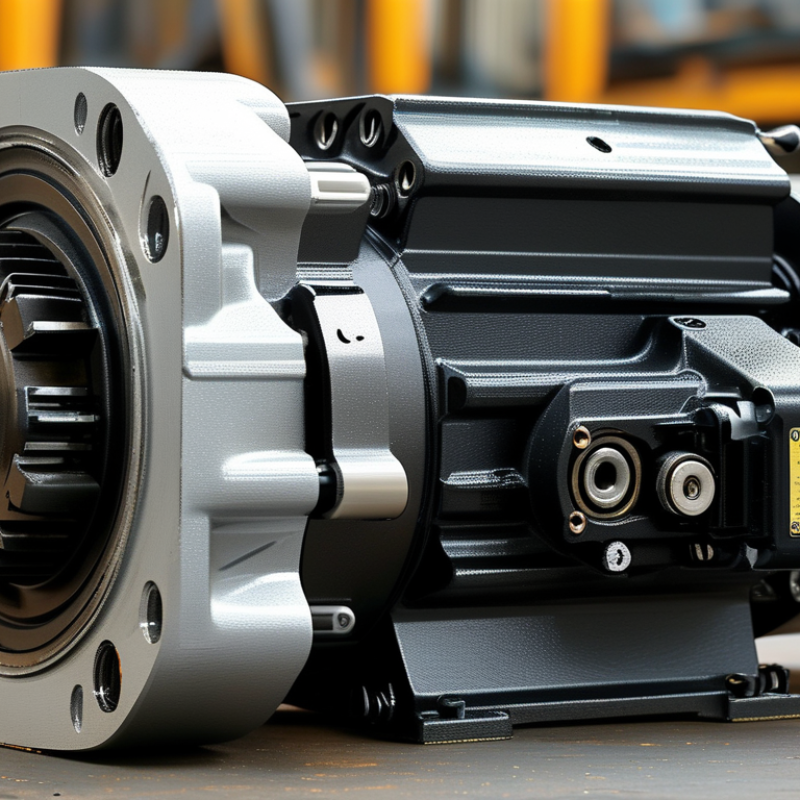
Define Load, Speed, Duty Cycle, and Accuracy Targets Using IEC 60034 S1–S10
How to Choose a Precision Gear Motor in 2026?
A precision gear motor should begin with the machine’s real load, not its catalog torque.
Record payload, friction, acceleration, stopping torque, and shaft orientation. Add reflected inertia from belts, screws, or rotary tables. A practical sizing check uses continuous torque, peak torque, and thermal limits separately. Rated torque alone can mislead.
IEC 60034-1 defines duty types from S1 through S10.
S1 means continuous operation at steady load. S2 describes short-time operation, while S3 includes repeated starts and rest periods. S4 adds starting effects, and S5 includes electric braking. S6 to S10 address intermittent loads, speed changes, and non-periodic duty. Choose the duty class from the actual motion profile. A five-second lift every minute is not S1. It is easy to misclassify.
Speed targets need more detail than “high speed.”
Specify output speed, acceleration time, and allowable overshoot. For accuracy, separate positioning error, repeatability, backlash, and torsional wind-up. A 0.1-degree target can fail if the coupling flexes under load. The 2024 World Robotics report recorded 541,302 industrial robot installations worldwide in 2023, showing the scale of precision motion demand. The International Energy Agency reports that electric motor systems consume roughly half of global electricity, making efficiency and thermal sizing important. My own caution is simple: calculations often look cleaner than factory floors. Dust, cold grease, and uneven loading still change performance. Validate the selected motor through a measured duty-cycle test.
Calculate Required Torque with T = 9550P/n and Apply the Correct Service Factor
How to Choose a Precision Gear Motor in 2026?
Start with the torque calculation. Use T = 9550P/n, where T is torque in newton-metres, P is power in kilowatts, and n is speed in revolutions per minute. A 2.2 kW motor running at 1,450 rpm produces about 14.5 Nm. With a 1.5 service factor, the design torque becomes 21.8 Nm. This is only the motor-side value. Gear ratio, gearbox efficiency, acceleration, and output speed must also be included.
Choose the service factor from real operating conditions, not habit. Continuous, smooth conveyor duty may need 1.25. Frequent starts, reversing, shock loads, or high inertia may require 1.5 to 2.0. The U.S. Department of Energy’s Motor Systems Market Assessment reports that motor systems consume more than 70% of industrial electricity in the United States. Efficient sizing therefore affects both reliability and operating cost. AGMA guidance also supports checking load type, duty cycle, lubrication, and thermal limits.
A neat calculation can still mislead. I would verify peak torque, not only average torque. Small backlash can damage positioning accuracy. Heat can reduce lubricant life. The chosen motor should survive the worst cycle, while avoiding excessive oversizing. That balance is easy to miss. Check the manufacturer’s test data, duty classification, and measured efficiency before final selection.
How to Choose a Precision Gear Motor in 2026? - Calculate Required Torque with T = 9550P/n and Apply the Correct Service Factor
| Application |
Load Profile |
Motor Power
(kW) |
Output Speed
(rpm) |
Basic Torque
T = 9550P/n (N·m) |
Service Factor |
Design Torque
(N·m) |
Minimum Selected Rated Torque
(N·m) |
Approximate Reduction Ratio
(at 1,500 rpm input) |
Selection Result |
| Belt Conveyor |
Uniform load with moderate starts |
1.50 |
60 |
238.75 |
1.50 |
358.13 |
400 |
25:1 |
Suitable when starting torque and intermittent overloads remain within the selected rating. |
| Indexing Table |
Frequent starts, stops, and positioning cycles |
0.75 |
30 |
238.75 |
1.75 |
417.81 |
450 |
50:1 |
Select a high-precision gearbox with low backlash and adequate peak-torque capacity. |
| Packaging Actuator |
Light duty with repeated acceleration |
0.40 |
120 |
31.83 |
2.00 |
63.67 |
80 |
12.5:1 |
Allow additional margin for rapid cycling, acceleration torque, and positioning accuracy. |
| Industrial Mixer |
Heavy, fluctuating load with possible shock |
2.20 |
45 |
466.44 |
1.75 |
816.27 |
900 |
33.3:1 |
Verify thermal capacity, shaft loading, and peak torque before final selection. |
| Vertical Hoist |
High starting load and significant shock potential |
3.00 |
20 |
1,432.50 |
2.00 |
2,865.00 |
3,000 |
75:1 |
Use a brake, load-holding protection, and a gearbox rated for lifting duty and peak loads. |
Calculation basis: Torque T is calculated in N·m using power P in kW and speed n in rpm: T = 9550P/n. Design torque equals basic torque multiplied by the service factor. Service factors shown are practical preliminary values; the final selection should also consider duty cycle, acceleration, inertia, ambient temperature, radial and axial loads, braking requirements, gearbox efficiency, backlash, and manufacturer-rated peak torque.
Compare Gear Ratios, Backlash, and Efficiency Across IEC IE3–IE5 Motor Classes
Choosing a precision gear motor in 2026 requires more than selecting the highest efficiency class. Gear ratio, backlash, and operating load must match the machine’s actual movement. A 10:1 ratio can deliver useful torque, but it may reduce output speed too sharply. A lower ratio may respond faster, yet demand a larger motor. Measure acceleration, duty cycle, and reflected inertia before deciding.
Backlash is critical in indexing tables, robotic joints, and screw-driven stages. Standard reducers may show several arcminutes of lost motion, while precision designs can reduce it significantly. However, low backlash often increases cost and may reduce tolerance to shock loads. Check backlash under the intended torque, not only in an unloaded catalog test. A small error can become visible as a few millimeters at the end of a long arm.
IEC IE3, IE4, and IE5 classes describe motor efficiency, not complete gear-motor efficiency. Reducer friction, seals, bearings, and the drive can change the final result. IE5 may save energy during long, heavily loaded operation, but the benefit can be modest during short cycles or frequent stops. I have found that real measurements sometimes challenge the spreadsheet. Record input power, output speed, temperature, and positioning error during a representative shift. The “best” ratio may still feel wrong in the machine.
Verify Gear Strength and Life Through ISO 6336 and AGMA 2101 Ratings
How to Choose a Precision Gear Motor in 2026?
Motor-driven systems consume roughly 68% of U.S. industrial electricity, according to the U.S. Department of Energy’s Industrial Decarbonization Roadmap (2022). This makes gear efficiency and service life practical cost issues, not minor specifications. For each candidate, calculate tooth-root bending stress and contact stress under the real torque cycle. ISO 6336-3 evaluates bending strength, while ISO 6336-2 addresses pitting resistance. ISO 6336-6 helps estimate service life under variable loading.
AGMA 2101-D04 provides another recognized rating method. Compare its allowable stress numbers, geometry factors, load distribution, and application factors with the supplier’s test conditions. Do not compare a 1,000-hour laboratory result with a field duty cycle without checking speed, shock, temperature, lubrication, and mounting accuracy. A gearbox can pass static strength calculations and still fail early through micropitting or excessive backlash. I still treat the first calculation as provisional. Real machines are rarely as clean as the spreadsheet.
Tips: Request the complete load spectrum, not only peak torque. Check ISO and AGMA results separately, then investigate large differences. Ask for calculated safety factors at startup and during reversing. Verify lubrication viscosity at operating temperature. Record actual vibration and backlash during commissioning. Small errors matter. A 0.05 mm alignment mistake can change contact patterns, although the exact effect depends on geometry and housing stiffness. Cite the calculation edition and material data in your purchase file.
How to Choose a Precision Gear Motor in 2026?
Verify gear strength and service life through ISO 6336 and AGMA 2101 rating methods.
This representative engineering comparison shows calculated bending and pitting safety factors for three operating conditions. ISO 6336 and AGMA 2101 are calculation methods rather than fixed product ratings; actual results depend on torque, speed, gear geometry, materials, lubrication, temperature, duty cycle, and reliability requirements. A higher safety factor generally indicates greater resistance to tooth bending or surface fatigue.
Check Thermal Limits, IP Protection Under IEC 60529, and Control Compatibility
How to Choose a Precision Gear Motor in 2026?
Thermal limits deserve more attention than peak torque. The IEA estimates that electric motor systems consume roughly 45% of global electricity. Small efficiency losses become expensive across continuous production. Check rated torque, speed, ambient temperature, duty cycle, and allowable winding temperature. A motor rated at 25°C may struggle inside a 45°C cabinet. Measure the housing after repeated reversals, not only during steady rotation. I have seen selection errors start with a perfect-looking catalog table. That assumption is often wrong.
IP protection must follow IEC 60529, not vague terms like “sealed.” IP65 resists dust ingress and water jets. It does not guarantee protection against immersion, hot washdown, or chemical exposure. IP67 allows temporary immersion under specified conditions, but cable entries still matter. Ask for test conditions and mounting orientation. A wet connector can defeat a strong motor enclosure. This detail is easy to miss.
Control compatibility should be checked before mechanical approval. Match encoder resolution, feedback protocol, supply voltage, peak current, braking energy, and commutation method. Confirm whether the drive supports the motor’s continuous and transient loads. A servo loop may hunt when gear backlash or compliance is ignored. I prefer testing the motor, gearbox, drive, and controller together at low speed. It takes longer. It reveals faults earlier. The 2024 industrial automation outlook from the International Federation of Robotics shows continuing growth in automated installations, increasing demand for reliable feedback and predictable thermal performance. Yet reports cannot replace a real duty-cycle test.
FAQS
: Match the ratio to speed, torque, acceleration, duty cycle, and reflected inertia. A 10:1 ratio increases torque but may reduce output speed too sharply. A lower ratio responds faster but may require a larger motor. Measure the machine’s real movement. The highest ratio is not always best.
Backlash creates lost motion during direction changes. It matters in indexing tables, robotic joints, and screw-driven stages. A small angular error can become several millimeters at a long arm’s tip. Check backlash under operating torque, not only without load. Catalog tests may feel too optimistic.
No. Motor efficiency does not represent complete gear-motor efficiency. Reducer friction, seals, bearings, and the drive also consume energy. Higher efficiency helps most during long, heavily loaded operation. Short cycles and frequent stops may reduce the benefit. Measure input power during a representative shift.
Record input power, output speed, temperature, vibration, and positioning error. Test acceleration, reversing, steady motion, and stopping. Measure the housing after repeated reversals. A spreadsheet can miss real heating. Real machines are messy.
Use recognized gear-rating methods for tooth bending, contact stress, and variable-load life. Calculate performance across the complete load spectrum. Include startup torque, reversing, shock, speed, temperature, and lubrication. Compare safety factors under normal and peak conditions. The first calculation is provisional.
Micropitting, poor lubrication, alignment errors, and excessive backlash can cause early failure. A 0.05 millimeter alignment mistake may change tooth contact patterns. The exact effect depends on housing stiffness and gear geometry. Check vibration and backlash during commissioning. Static strength is not enough.
Check rated torque, speed, ambient temperature, duty cycle, and allowable winding temperature. A motor rated at 25°C may struggle inside a 45°C cabinet. Measure housing temperature after repeated reversals. Do not rely only on steady-rotation data. Peak torque does not explain everything.
Confirm the enclosure rating, test conditions, mounting orientation, and cable-entry protection. Dust and water-jet resistance does not guarantee immersion or chemical resistance. Match encoder resolution, feedback protocol, voltage, peak current, and braking energy. Test the motor, gearbox, drive, and controller together at low speed. That slower test often reveals faults earlier.
Conclusion
Choosing a Precision Gear Motor in 2026 requires a systematic evaluation of performance, durability, and control requirements. Begin by defining the expected load, operating speed, duty cycle, and positioning accuracy according to IEC 60034 S1–S10. Calculate the required torque using T = 9550P/n, then apply an appropriate service factor to account for starting loads, shocks, and variable operating conditions. Compare available gear ratios by considering backlash, transmission efficiency, response speed, and the motor’s IEC IE3–IE5 efficiency class.
Mechanical reliability is equally important. Verify gear strength, fatigue resistance, and expected service life using ISO 6336 and AGMA 2101 calculations. Thermal limits should be checked for continuous and intermittent operation, especially in compact enclosures or high-load applications. Confirm that the enclosure’s IP protection rating meets the requirements defined by IEC 60529. Finally, ensure compatibility with the selected drive, feedback devices, braking system, voltage, and control protocol so the Precision Gear Motor can deliver accurate, stable, and efficient motion throughout its intended service life.
