Choosing the best High Efficiency Motor in 2026 is not simply a matter of buying the highest efficiency class. The right choice depends on the load, operating hours, speed control, installation conditions, and lifetime service costs. A motor that runs continuously beside a warm production line may justify a higher purchase price; one used briefly may not. Details matter.
The energy stakes are substantial. In its 2011 report, Energy-Efficiency Policy Opportunities for Electric Motor-Driven Systems, the International Energy Agency estimated that motor systems use 43–46% of global electricity. Co-author and energy-efficiency specialist Paul Waide and his fellow author wrote, “Electric motor systems account for 43% to 46% of all global electricity consumption.” That figure is a global estimate, not a promise of savings for any single plant. Still, it explains why comparing nameplate efficiency alone can miss the bigger opportunity: pumps, fans, gearboxes, and variable-speed drives shape the full system’s performance.
Start with the job the motor must do. Record its load profile, daily run time, required speed, and available supply. Then compare efficiency ratings, starting behavior, controls, maintenance needs, and total cost over the expected service life. Keep the assumptions visible. A modest error in annual operating hours can distort the payback calculation. This guide examines those trade-offs and explains which motor types fit common applications in 2026. It also flags where better measurements—or a second opinion—may change the answer.
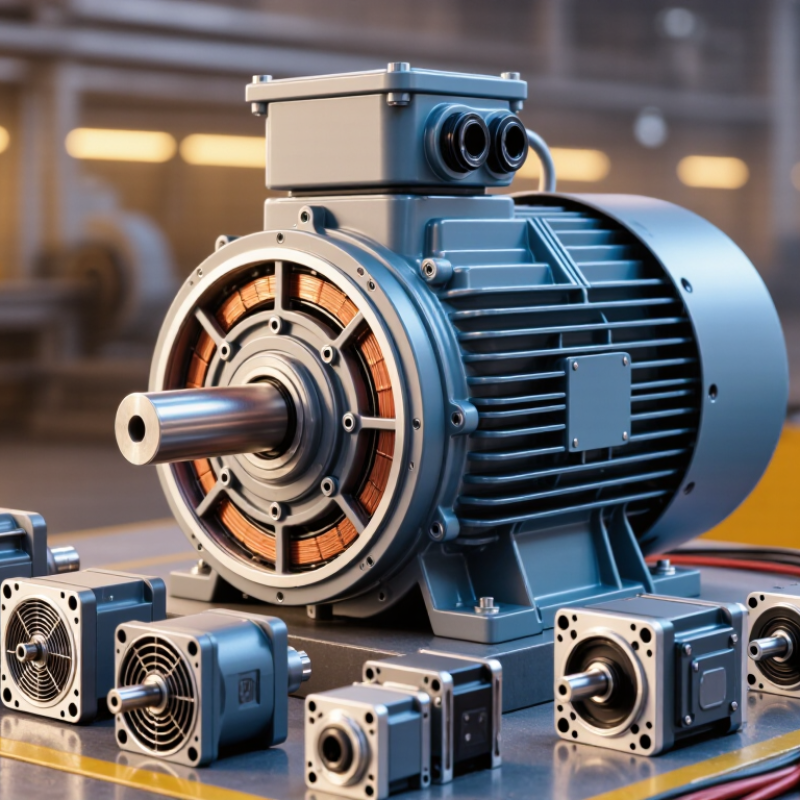
Set the 2026 Benchmark: IEC 60034-30-1 Defines IE1–IE4 Classes
IEC 60034-30-1 sets a shared benchmark for classifying the energy efficiency of many line-operated AC motors. It defines four levels: IE1, IE2, IE3, and IE4. IE4 is the highest class in this scale. The label helps buyers compare motors on a consistent basis, rather than relying on vague claims such as “high efficiency.”
The class alone does not tell you which motor is best for your equipment. Check its rated output, pole count, supply conditions, and expected load. A motor running a lightly loaded pump may perform differently from one operating near full load for long shifts. Compare the declared efficiency at the relevant rating, and confirm that the motor suits the drive and duty cycle. Small details matter. I still find this easy to overlook when comparing neat rows in a datasheet. IE4 may reduce losses, but the purchase price, operating hours, and maintenance needs also shape the real-world choice. The 2026 benchmark is useful; it is not a substitute for checking how the motor will actually run.
Which High-Efficiency Motor Is Best in 2026?
IEC 60034-30-1 sets efficiency classes from IE1 to IE4. The chart compares the minimum efficiency thresholds for a 7.5 kW, four-pole motor operating at 50 Hz.
For this motor rating, IE4 has the highest specified efficiency threshold. Actual class thresholds vary with motor output, pole count, and frequency; efficiency class alone does not determine the best motor for every application.
Compare IE3, IE4, and IE5 by Output, Pole Count, and Rated Load
Which High Efficiency Motor Is Best in 2026?
Compare IE3, IE4, and IE5 by Output, Pole Count, and Rated Load
IE3, IE4, and IE5 describe efficiency classes, not motor output or speed. A 15 kW, four-pole IE3 motor and a matching IE4 model can deliver similar shaft power. Their efficiency differs. Pole count affects speed: a four-pole motor typically runs slower than a two-pole motor on the same supply. Always check the nameplate and operating frequency, since actual speed also changes with load and design.
Rated load matters just as much. A motor often performs best near its intended operating range; a large motor running lightly may waste energy. For a pump running many hours, compare measured load, annual operating time, and efficiency data at that load. IE4 or IE5 may reduce energy use, but the payback depends on electricity costs, runtime, and purchase price. IE5 availability and applicable test requirements can vary, so verify the relevant specification. It is easy to focus on the class label and overlook the duty cycle.
Tips: Match output and pole count to the driven equipment first. Then compare efficiency at the expected load, not only at full load. Check mounting, voltage, and starting needs, too. Small details matter. If the load estimate is uncertain, measure it before choosing; sizing from a catalog alone can be misleading.
Assess Induction, Permanent-Magnet, and Synchronous-Reluctance Motors
In 2026, the best high-efficiency motor depends on its workload, drive, and maintenance needs. An induction motor is a familiar choice for pumps, fans, and conveyors. Its rugged construction handles demanding environments, and technicians often know how to service it. But rotor currents create heat, and efficiency can fall when the motor runs well below its rated load. That detail matters.
A motor’s nameplate efficiency alone cannot predict energy use across a variable operating day.
Permanent-magnet motors avoid rotor excitation losses and can deliver high efficiency in compact packages. They suit applications where space and energy use matter, though magnet temperature and material costs deserve attention. Synchronous-reluctance motors use a rotor without magnets or windings, reducing rotor losses. They generally need a suitable variable-speed drive, so compare the motor and drive as one system.
I would check measured performance at typical operating speeds, not just peak ratings.
One caveat is easy to miss: installation, cooling, and control settings can change real-world results. And field data may be imperfect. A brief load log can reveal more than a tidy specification sheet.
Check EU Regulation 2019/1781: IE3 Requirements for Many 0.75–1,000 kW Motors
Choosing a high-efficiency motor in 2026 starts with the machine’s real workload. A pump that runs steadily has different needs from a conveyor that starts and stops all day. Efficiency matters. So do speed, load, and operating hours.
EU Regulation 2019/1781 sets ecodesign requirements for many electric motors placed on the EU market. For many three-phase motors rated 0.75 to 1,000 kW, with two, four, or six poles, IE3 is the minimum efficiency class. The scope has exceptions, so check the motor’s design and intended use rather than relying on its power rating alone. The regulation also covers other motor categories and variable speed drives.
Read the nameplate and technical documentation before comparing options. Check rated output, poles, efficiency class, and whether the motor will operate with a drive. A higher-efficiency model may reduce energy use during long operating hours, but savings depend on the actual load and control settings. Small details count. A motor oversized for its duty can spend much of its life running inefficiently. I have seen selection decisions lean too heavily on the IE label; the installation deserves a closer look.
Which High Efficiency Motor Is Best in 2026? — EU Regulation 2019/1781: IE3 Requirements for Many 0.75–1,000 kW Motors
| Motor category |
Rated output range |
EU minimum efficiency class |
Applicable date |
Practical selection guidance |
| Three-phase, 2-, 4-, 6- or 8-pole motors within the regulation’s scope |
0.12 kW to less than 0.75 kW |
IE2 |
1 July 2021 |
Check the motor’s rated output, pole count, duty, and exclusions before comparing offers. A higher-efficiency option may reduce losses where operating hours are high. |
| Three-phase, 2-, 4- or 6-pole motors within the regulation’s scope |
0.75 kW to 1,000 kW |
IE3 |
1 July 2021 |
IE3 is the regulatory minimum for many motors in this range. For 8-pole motors, the applicable minimum is IE2 rather than IE3. |
| Three-phase, 2-, 4- or 6-pole motors within the regulation’s scope |
75 kW to 200 kW |
IE4 |
1 July 2023 |
IE4 is required for covered motors in this range, subject to specified exceptions, including certain increased-safety Ex eb and brake motors. |
| Single-phase motors within the regulation’s scope |
0.12 kW and above |
IE2 |
1 July 2023 |
Confirm that the motor is covered by the regulation and check its product documentation for the declared efficiency class. |
| Covered motor already meeting the applicable minimum |
Any applicable rating |
Consider a higher class where available |
For new selection or replacement |
Compare purchase price, expected annual operating hours, load profile, electricity cost, speed-control needs, and system losses. The best choice depends on the application, not efficiency class alone. |
Scope note: Regulation (EU) 2019/1781 sets ecodesign requirements for specified motors and variable speed drives. The table summarizes common motor requirements; coverage depends on technical details and exemptions. Among other conditions, relevant motor scope can depend on rated output, frequency, voltage, pole count, operating conditions, and whether the motor is fully integrated into another product. Verify the current regulation and the motor’s technical documentation before purchasing or assessing compliance. IE class limits vary by rated output and number of poles; this table does not imply one universal efficiency percentage for each class.
Choose by Duty Cycle, Variable-Speed Needs, and Lifecycle Energy Cost
Which High Efficiency Motor Is Best in 2026?
The best motor depends on how it runs, not just its efficiency label. For steady, long-hour duty, compare high-efficiency models using expected annual operating hours and load. The U.S. Department of Energy notes that energy can account for more than 95% of a motor’s lifetime cost. A small efficiency gain may therefore matter on a continuously loaded pump, while it may not justify a costly upgrade on a rarely used machine. That changes the answer. Also check the actual duty cycle: frequent starts, low-load operation, and heat can affect performance and service life.
Tips: For variable-speed equipment, confirm the motor and drive are designed to work together. Estimate savings from measured load profiles, not nameplate ratings alone. A fan slowing down at night may save more than an oversized motor running at full speed. Ask for the assumptions behind any projected payback.
The International Energy Agency estimates that motor-driven systems use around 45% of global electricity, making application-level choices significant. For pumps and fans with changing demand, a variable-speed setup can reduce energy use by matching output to need. For constant-speed conveyors or compressors, prioritize efficiency at the operating point and check starting frequency. Compare purchase price, expected kilowatt-hours, maintenance, and replacement risk over the same service period. I’ve seen selection sheets miss real operating hours; that detail is easy to overlook, and it can distort the lifecycle-cost result.
Conclusion
Choosing the best High Efficiency Motor in 2026 starts with understanding the IEC 60034-30-1 efficiency classes, from IE1 through IE4, and how they apply to the motor’s output, pole count, and rated load. IE3, IE4, and IE5 motors can differ in purchase cost, operating efficiency, and suitability for particular applications. Induction motors remain a familiar option, while permanent-magnet and synchronous-reluctance designs may offer advantages in efficiency or variable-speed operation depending on the system.
The right choice depends on how the motor will actually be used. EU Regulation 2019/1781 sets IE3 requirements for many motors rated from 0.75 to 1,000 kW, with scope and exceptions to consider when specifying equipment. Compare duty cycle, load variation, speed-control needs, installation requirements, and expected operating hours. Evaluating lifecycle energy costs alongside upfront price can reveal which motor class and technology offers the best overall value for a specific application.
