2026 Top Custom Gear Motor Manufacturers for Global Buyers

Time:2026-09-22 Author:Madeline
0%

Choosing the right Custom Gear Motor manufacturer can shape a product’s efficiency, lifespan, and total operating cost. In 2026, global buyers face more options, but also more inconsistent technical claims. A supplier may offer an attractive price while overlooking torque loss, thermal limits, or gear noise.

This guide to 2026 Top Custom Gear Motor Manufacturers for Global Buyers examines manufacturers through practical purchasing criteria. These include engineering experience, production capacity, quality systems, communication, customization depth, and after-sales support. We consider details such as voltage ranges, gearbox ratios, shaft dimensions, IP ratings, duty cycles, and expected service life. A reliable manufacturer should explain its test methods clearly. It should also provide drawings, samples, inspection records, and realistic delivery schedules.

Specifications matter most.

The evaluation also considers how suppliers respond to real project problems. Can they adjust a motor after a prototype reveals vibration? Can they maintain performance across different temperatures and load conditions? These questions often reveal more than a polished website. However, no ranking can fit every application. A manufacturer suited to medical equipment may not suit agricultural machinery or automated warehouse systems. Supplier information can also change during the year, so buyers should verify certifications, factory capabilities, and sample performance before signing contracts. Some recommendations may require closer review. That is part of responsible sourcing. The goal is not to promote the cheapest option, but to help buyers identify technically capable, transparent, and dependable partners for long-term projects.
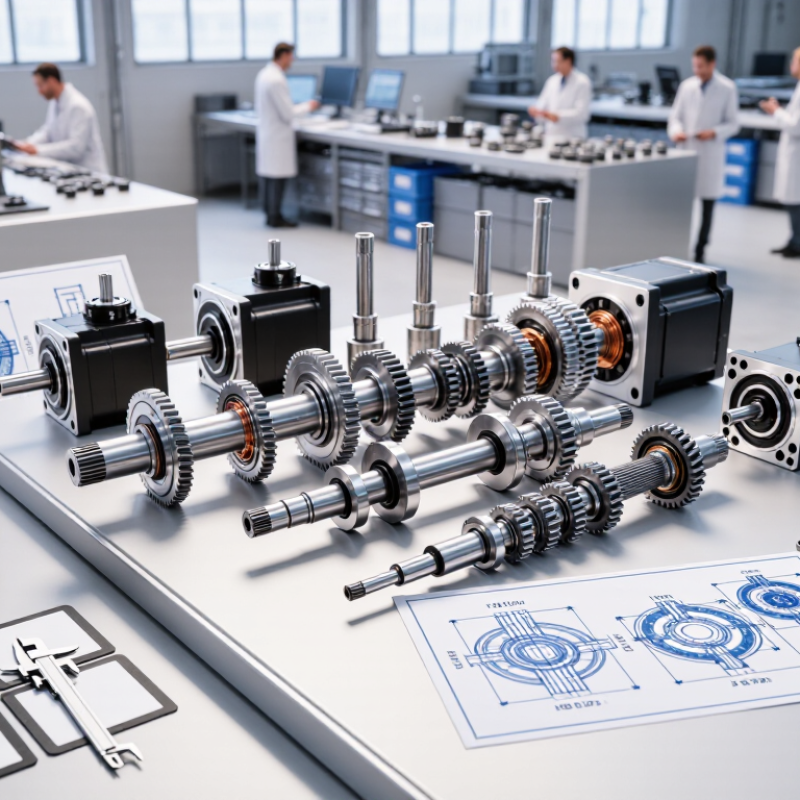
2026 Top Custom Gear Motor Manufacturers for Global Buyers

Gear Motor Fundamentals: Torque, Gear Ratio, Speed, Duty, and IP Ratings

2026 Top Custom Gear Motor Manufacturers for Global Buyers

A gear motor combines an electric motor with a gearbox, trading speed for usable torque. Output torque roughly equals motor torque multiplied by gear ratio and efficiency. A 10:1 ratio does not create free power. It increases torque while reducing speed and adding losses.

The International Energy Agency reports that electric motor-driven systems consume about 43–46% of global electricity. Efficient sizing matters beyond the purchase price.

Select torque from the real load, including starting friction, shock loads, and acceleration. A conveyor needing 80 Nm continuously may require much more during startup. That detail is often missed.

Duty ratings also matter: IEC 60034-1 defines operating classes such as S1 continuous duty and S3 intermittent duty. A motor rated for short cycles may overheat during constant operation.

IP ratings describe enclosure protection under IEC 60529. IP65 means dust-tight protection and resistance to water jets. IP67 adds temporary immersion protection, but it does not automatically guarantee chemical resistance or suitability for every washdown process.

Check seals, cable glands, ambient temperature, and mounting position.

The U.S. Department of Energy’s motor-system guidance also emphasizes that poor matching between motors, drives, and loads can increase system losses.

In practice, calculations remain imperfect without measured load data. Measure current, speed, and temperature where possible, then question the assumptions before approving a custom design.

2026 Ranking Metrics: IE3/IE4 Efficiency Under IEC 60034-30-1

For 2026, custom gear motor manufacturers should be ranked by verified efficiency, not catalogue promises.

The IEA Energy Efficiency 2023 report estimates that electric motor systems consume about half of global electricity. Small efficiency gains can therefore reduce substantial operating costs.

IEC 60034-30-1 defines IE3 and IE4 efficiency classes for specified motor types, outputs, and speeds. It does not automatically certify the complete gear motor assembly.

Ranking metrics should include rated-point efficiency, load performance, temperature rise, test tolerance, and documentation under IEC 60034-2-1. Test reports matter.

Real projects are less tidy.

A reliable evaluation should separate motor losses from gearbox losses. Buyers should request efficiency curves, duty-cycle data, noise readings, thermal limits, and sample-based production tests.

The U.S. Department of Energy’s Industrial Motor Systems Market Assessment highlights the importance of system-level optimization, rather than motor selection alone.

IE4 is not always the best commercial choice. Oversized gearing, poor lubrication, or frequent starts can erase its advantage.

I would score manufacturers on measured performance across realistic loads, serviceability, and traceable quality records. This approach is slower, but more defensible.

One weakness remains. Public data often reflects laboratory conditions, while factories face dust, voltage variation, and uneven maintenance. A transparent 2026 ranking should disclose these gaps instead of hiding them behind a single efficiency label.

Top Manufacturer Profiles: Custom Ratios, 24–48 VDC, and ≥10,000-h L10 Life

2026 Top Custom Gear Motor Manufacturers for Global Buyers

For global buyers, a custom gear motor starts with the ratio, not the catalog. Experienced suppliers should calculate torque, duty cycle, backlash, and thermal limits together. A 24 VDC motor suits compact mobile equipment and battery systems. A 48 VDC design can reduce current at similar power, lowering cable losses. However, voltage alone does not prove efficiency. The International Energy Agency estimates that electric motor systems consume about half of global electricity. Small design errors can become expensive at scale.

Manufacturer profiles should show measured ratio accuracy, gearbox materials, sealing methods, and load-test records. Custom ratios may range from slow, high-torque outputs to faster conveyor drives. Buyers should request speed-torque curves at actual supply voltage. Ask for current draw after thermal stabilization. That detail is often missing.

Life claims need careful reading. ISO 281 defines L10 bearing life as the operating time reached by 90% of an identical group. Therefore, a ≥10,000-hour L10 claim is not a guaranteed service life for every unit. It depends on load, lubrication, alignment, temperature, and shock. The European Association of Bearing Manufacturers also stresses application conditions in life calculations. I would question any supplier offering 10,000 hours without test boundaries. Field experience matters more than polished tables. Independent endurance testing, traceable samples, and failure analysis provide stronger evidence than marketing language. Still, even these controls cannot remove every uncertainty.

Supplier Comparison: MOQ, 4–8-Week Lead Times, QA, and Warranty Coverage

For global buyers, supplier comparison should begin with MOQ, not catalogue breadth. A practical custom order often starts near 100–500 units, but tooling can raise the first batch requirement. The International Energy Agency reports that electric motor systems consume roughly half of global electricity. Small efficiency errors therefore become expensive at scale. A low MOQ is not automatically the better deal.

A credible supplier should explain its 4–8-week lead time in writing. Ask whether it includes engineering approval, tooling, production, inspection, and export packing. The 2024 Interact Analysis motor market research highlights continuing demand for efficient, connected motor systems. That trend makes documented testing more important. Review torque curves, thermal-rise results, noise readings, gear backlash, and load-cycle samples. ISO 9001:2015 certification supports process control, but it does not prove every motor meets your specification. That distinction is easy to miss.

Warranty terms deserve equal attention. Many offers provide 12 months after shipment, while stronger agreements begin coverage after commissioning. Check exclusions for overload, incorrect installation, and unattended storage. Request serial-level traceability and a written failure-analysis process. The U.S. Department of Energy has repeatedly linked efficient motor selection with lifecycle savings, not merely purchase price. My concern is simple: buyers sometimes accept a short warranty to protect schedule. That shortcut can weaken the business case. Ask for replacement timing, spare-part availability, and response targets before approving the purchase.

Global Buyer Checklist: CE, UL, RoHS, ISO 9001, and Total Cost of Ownership

2026 Top Custom Gear Motor Manufacturers for Global Buyers

Global buyers should examine compliance evidence before comparing quoted prices. CE marking requires a valid EU Declaration of Conformity and supporting technical documentation. It is not simply a quality badge. For UL requirements, confirm the exact motor configuration, certification scope, and applicable market. RoHS documentation should cover restricted substances, materials, and production changes. ISO 9001 shows a quality management system, but it does not guarantee every motor will perform well. Ask for current certificates, test reports, audit scope, and the actual manufacturing site.

Tips: Request one sample, not only a brochure. Test rated torque, startup current, noise, backlash, thermal rise, and duty cycle. Record results under your real load profile. A custom gear motor may pass a laboratory test yet fail after repeated reversing. That detail is easy to miss.

Total cost of ownership includes tooling, engineering changes, freight, installation, energy use, lubrication, spare units, and downtime. Compare service intervals and replacement lead times beside the initial quotation. A cheaper motor can become expensive when its gearbox needs frequent adjustment. Calculate costs over five years, using realistic operating hours. Be cautious with estimated savings; incomplete maintenance data can distort the result. I would also leave room for redesign, because early specifications are often less precise than expected. Reliable manufacturers explain limitations clearly and provide traceable inspection records.

FAQS

What is a gear motor?

A gear motor combines an electric motor with a gearbox. It reduces speed and increases usable torque. The gearbox does not create free power.

How does gear ratio affect torque and speed?

A 10:1 ratio can greatly increase output torque. However, output speed decreases by about ten times before losses. Efficiency reduces the final torque.

How should I choose the required torque?

Start with the real load, not only its running weight. Include starting friction, acceleration, and sudden shock loads. An 80 Nm conveyor may need much more torque during startup. Measure the load if possible.

Why does duty rating matter?

Duty rating describes how long and how often the motor operates. Continuous operation can overheat a motor designed for short cycles. A motor suitable for intermittent use may fail under constant running. This is easy to overlook.

What do IP65 and IP67 indicate?

IP65 protects against dust and water jets. IP67 also supports temporary immersion. Neither rating automatically proves chemical resistance. Check seals and cable glands.

What installation details should I check?

Review ambient temperature, mounting position, cable entry, and ventilation. A sealed enclosure may still overheat in a hot cabinet. Washdown conditions require more than an IP number. Ask for evidence.

Which documents should global buyers request?

Request current conformity documents, test reports, and manufacturing-site details. Check whether certification covers the exact motor configuration. A quality-system certificate does not guarantee perfect motor performance. Read the scope carefully.

What tests should be performed on a sample motor?

Test rated torque, startup current, noise, backlash, temperature rise, and duty cycle. Use the actual load pattern when possible. Repeated reversing can reveal problems hidden by simple laboratory tests. One sample helps.

How should total ownership cost be calculated?

Include tooling, engineering changes, freight, installation, energy, lubrication, spare units, and downtime. Compare costs over five years using realistic operating hours. A low purchase price may hide frequent gearbox adjustments. Leave room for redesign. Early specifications are often imperfect.

Conclusion

This guide to the 2026 top Custom Gear Motor manufacturers helps global buyers evaluate reliable solutions for industrial and commercial applications. It explains essential fundamentals, including torque, gear ratio, output speed, duty cycle, thermal performance, and IP protection ratings. The ranking approach emphasizes motor efficiency under IEC 60034-30-1, with attention to IE3 and IE4 performance, as well as custom ratios, 24–48 VDC options, and target L10 lifespans of at least 10,000 hours.

Buyers will also find practical criteria for comparing suppliers, such as minimum order quantities, typical 4–8-week lead times, quality assurance procedures, testing capabilities, and warranty coverage. The checklist highlights important documentation and certifications, including CE, UL, RoHS, and ISO 9001. By reviewing purchase price alongside energy use, maintenance, service life, and delivery reliability, companies can make better total cost of ownership decisions and select a Custom Gear Motor supplier suited to their technical and operational requirements.

Madeline

Madeline

Madeline is a dedicated marketing professional with a wealth of expertise in our company's core offerings. With a keen understanding of the industry, she brings a unique perspective to her role, consistently delivering high-quality content that highlights the superior aspects of our products. As......